

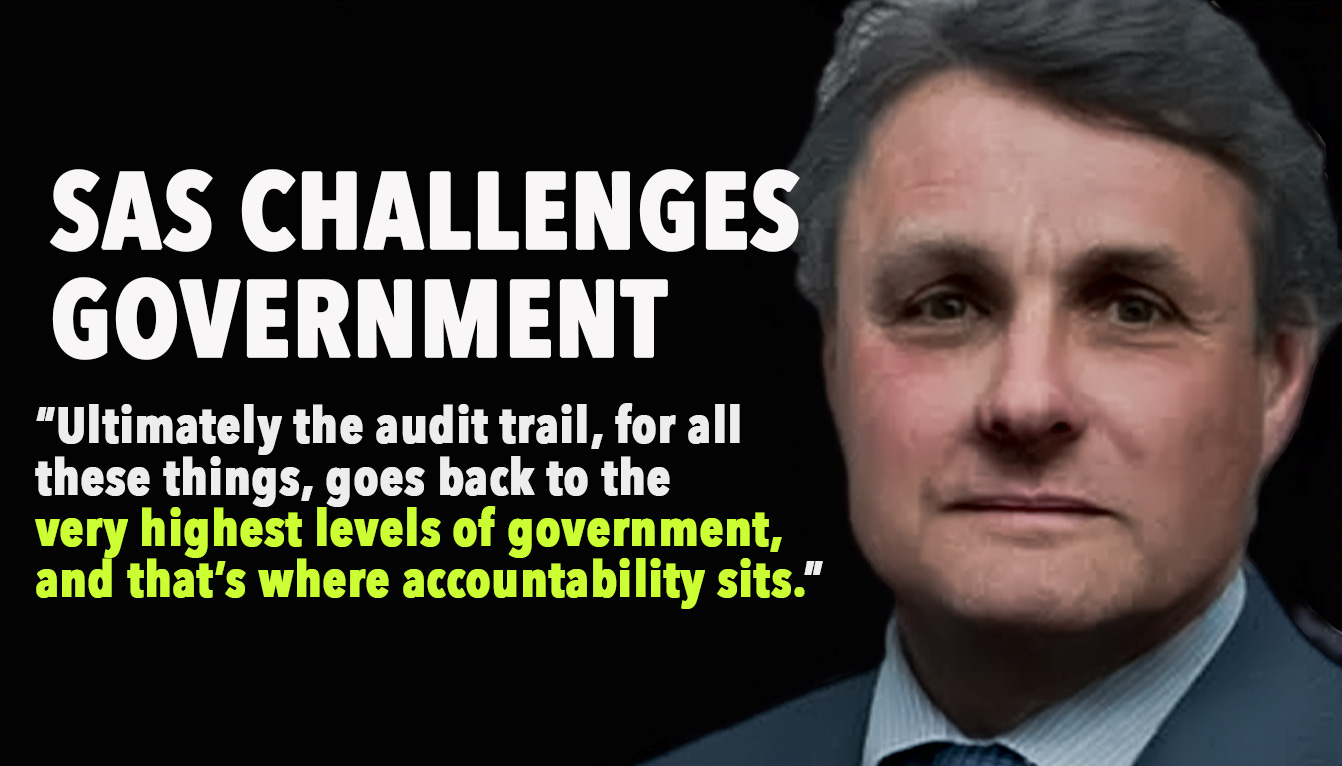
The organisation representing SAS veterans has issued one of its strongest warnings yet over the Government’s Northern Ireland Troubles Bill, saying it is prepared to take legal action if ministers fail to provide adequate protection for those who served.
The intervention from the Special Air Service Regimental Association (SASRA) comes as Parliament prepares to resume consideration of legislation that will reshape the system for dealing with Northern Ireland legacy cases.
SASRA says it is prepared to “do whatever it takes” to protect former soldiers from what it describes as the “manifestly unfair treatment” produced by Northern Ireland legacy processes. It has warned that, unless the Government changes course, it will mount a “robust legal challenge”.
That alone represents a significant escalation.
But the argument being made by SAS veterans goes considerably further than the treatment of those who served in Northern Ireland.
From veterans’ justice to national security
Brigadier Ed Butler, president of SASRA and a former commanding officer of 22 SAS, has warned that the consequences are already being felt among today’s Armed Forces.
According to Butler, some soldiers are being deterred from attempting SAS selection because they fear that operational decisions made today could result in investigations and legal proceedings many years into the future.
His warning is stark: “The very worst case scenario is you have a completely whittled-down special forces capability.”
He argues that personnel will become increasingly reluctant to undertake the exceptionally high-risk operations demanded of special forces if they cannot be confident that the state will stand behind lawful decisions made during those operations.
That changes the nature of the debate.
The question is no longer simply what constitutes a fair system for dealing with events that occurred during the Troubles.
It is whether the way Britain treats yesterday’s soldiers affects its ability to recruit and retain the soldiers it may need tomorrow.
Who ultimately carries responsibility?
Butler also raises a question that goes to the heart of Justice for Veterans’ concerns about historic military operations: where does responsibility ultimately lie when the state sends its Armed Forces into danger?
Special forces operations are not private ventures undertaken by individual soldiers.
Butler points out that operations in Northern Ireland and Afghanistan were meticulously planned and could ultimately be authorised at the highest levels of the military and government.
Yet, decades later, it is overwhelmingly the individuals who carried out those operations who find themselves answering questions about them.
As Butler puts it: “Ultimately the audit trail, for all these things, goes back to the very highest levels of government, and that’s where accountability sits.”
Nobody seriously argues that members of the Armed Forces should be above the law. Where genuinely new evidence of criminal wrongdoing emerges, it should be investigated.
But accountability cannot sensibly end with the person who pulled a trigger.
Military operations take place within chains of command, rules of engagement, intelligence assessments, legal advice and political authorisation. If decisions made within that system are subsequently judged to be wrong, the state cannot simply detach itself from the framework it created and leave individual veterans to bear the consequences.
A growing challenge to the Government
SASRA’s intervention also comes alongside the publication of the major Policy Exchange report, The Special Air Service in Northern Ireland: What they did, why it matters, and what is being done to them now.
Significantly, that report carries a foreword from former Armed Forces Minister Al Carns MP.
Carns makes clear that genuinely new and compelling evidence should be examined. But he draws an equally important distinction between accountability and perpetual investigation:
“No soldier should be above the law. Equally, no soldier should face endless legal jeopardy.”
And: “Accountability is not the same as perpetual investigation. Justice is not served when the process itself becomes the punishment.”
SASRA has now put forward specific demands. It wants proceedings prevented unless there is compelling new evidence, key decisions are taken outside Northern Ireland, effective independent oversight is in place, and changes are made to the relationship between the Bill and the Remedial Order.
The Government rejects the suggestion that its legislation will expose veterans to needless repeated investigation. It says there will be no prosecution of veterans for having followed the rules, that the reformed Legacy Commission will become the primary route for families seeking answers, and that the Bill will include new protections for former service personnel.
Those assurances will now be tested against the legislation itself.
The issue is becoming much bigger than Northern Ireland
The importance of Butler’s intervention lies in its connection of three issues that have too often been considered separately: Legacy, the responsibility of government for military operations, and the future effectiveness of Britain’s Armed Forces.
If serving personnel come to believe that the state may authorise dangerous operations today but leave them personally exposed to changing legal standards decades afterwards, the consequences will not remain confined to elderly Northern Ireland veterans.
They will affect the next generation's willingness to serve.
For a country that expects a very small number of people to undertake exceptionally dangerous operations on its behalf, that should concern everyone — not just veterans.
The Government therefore has more to answer than whether its Troubles Bill is technically workable. It must demonstrate that Britain can pursue truth and accountability without breaking the relationship of trust between the state and those it sends into harm’s way.
There is nothing fair and just about the British Government, and never has been, never will be.
These are the actions of a failing Goverment. Knowing they will never get back in power.
The Great British People know the plan. Watch them give muslims everything and try to destroy the fastest growing Political 🩵 Party ever in the UK.
A Keir, started and finished Labour. 🇵🇸