

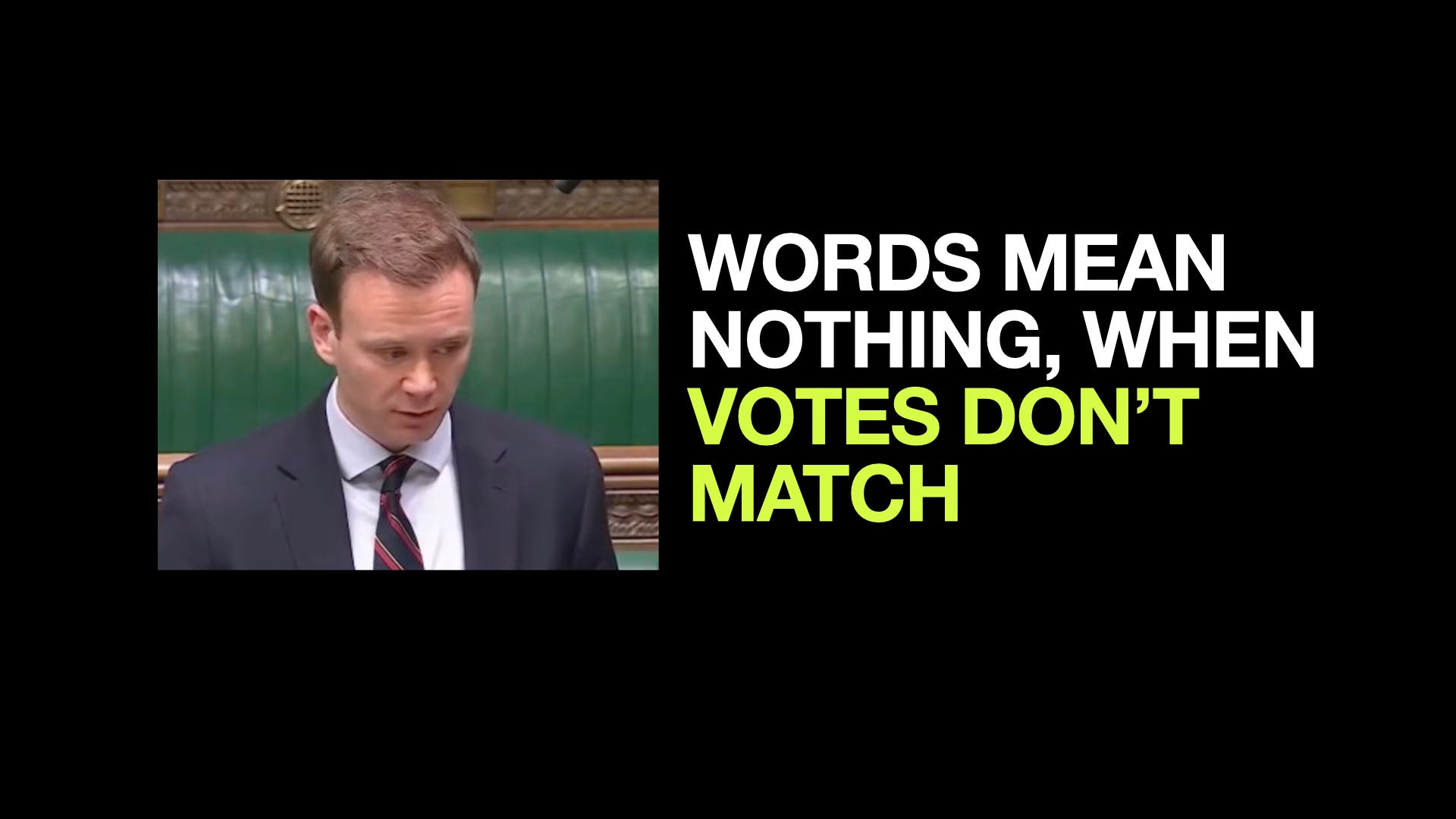
Fred Thomas MP’s recent comments on the Legacy debate reveal the increasingly difficult position many Labour MPs now find themselves in.
On the one hand, there is growing acknowledgement that elderly veterans should not face disproportionate, repeated, and effectively endless legal process decades after service in Northern Ireland.
On the other hand, the Government continues to advance legislation that many veterans believe will do precisely that.
The contradiction is becoming harder to ignore.
In his recent statement, Fred Thomas correctly recognises a reality veterans have warned about for years:
“It’s not the fear of conviction… it’s the fear of spending years of energy and effort defending themself in court.”
That point matters.
Because the central issue in much of the Legacy debate has never simply been conviction. It has been process itself.
The punishment increasingly becomes:
The investigation
The uncertainty
The reputational damage
The financial strain
The psychological burden
The reopening of events from half a century ago under entirely different political conditions
Many veterans believe that distinction is still poorly understood inside Westminster.
But there is another problem.
On 21 January 2026, Fred Thomas voted for the Government’s Remedial Order.
That order dismantled key parts of the existing 2023 Legacy Act framework before replacement safeguards had been fully defined, scrutinised, or enacted.
Then, on 27 April 2026, when the Government moved the new Troubles Bill into the next parliamentary session through a carry-over motion, he did not vote either way.
That sequence matters politically because Labour’s language around the 2023 Act has steadily shifted.
First, the Act was described as: “Illegal”
Then: “Unlawful”
Then: “Non-compliant”
And now increasingly: “Unworkable”
Those are not the same things.
After the Dillon ruling, the original sweeping political claims about the Act’s legality became much harder to sustain in absolute terms. The Court’s objections were narrower and more specific than much of the public rhetoric suggested, particularly around immunity arrangements and procedural restrictions.
Which raises a legitimate question the Government still has not properly answered:
What exactly was so fundamentally “unworkable” about the 2023 framework that it could not have been repaired through targeted amendment?
If immunity provisions were flawed, they could be amended.
If investigative safeguards were insufficient, they could be strengthened.
If oversight mechanisms required reform, Parliament could reform them.
Instead, the Government chose near-total legislative replacement while simultaneously asking veterans to trust that “protections” will emerge later in the process.
That is where confidence begins to collapse.
Because, from the perspective of many veterans, the practical sequence appears to be:
Remove existing protections first
Promise revised protections later
Ask affected individuals to trust the political process in the meantime
That may make sense inside Westminster procedure.
It looks very different to ageing former soldiers, police officers, intelligence personnel, and their families who have already spent years navigating shifting political language, changing legal frameworks, and repeated reassurances.
None of this means there should be immunity from wrongdoing.
But there is an increasing sense that the debate is drifting away from principles of finality, proportionality, and historical reality, and towards a system in which process becomes perpetual.
That is why the language matters.
“Illegal” carries one implication.
“Unworkable” carries another entirely.
And if the argument has now shifted from legality to workability, ministers should explain clearly why amendment was impossible before dismantling the existing framework.
Hello folks this is the thing. Words cease to mean anything, unless they are coupled with the right actions! The reason being is that those woke bastards down in London are not prepared to stick their necks out and say; " This is wrong, our veterans deserve better than this, and we must put it right for them!" We've tried to teach them about The World of a Soldier, but they don't want to know. The difficulty central to this whole affair is, those against veterans have set out on a perverse path. It would appear that the word Justice has NOT been applied to to the Veteran Community in a constructive or fair and balanced way. Marginalised by our own Government; while the Terrorist Fraternity and their families rub their hands with glee, tripping over The Pound Signs! Yes my friends, what a fucking disgrace,! We're not seeking retribution because we have dignity and self-respect. From this government we want to see that respect mirrored insomuch as, all veterans are honoured, protected and highly valued for the courageous work, loyalty and the service they've given to Great Britain, Northern Ireland and in any other theatres of conflict. And never have to face prosecution in a court of law!
Eic wilson.....The quisling starmer and his leechy friend Hermer, along with his yes boy benn, are purely coffin chasers looking for a quick buck and notoriety, with no interest in the British people or it's military.When a young man or woman join the military they are required to take the oath of allegiance known as ( THE ATTESTATION CEREMONY) ....it says......I swear by almighty god that I will be faithful and bear true allegiance to his majesty king Charles 111 his heirs and succesors and that I will as is duty bound honestly and faithfully defend his majesty, his heirs and successors in person, crown and dignity, against all enemies, and will observe and obey all orders of his majesty, his heirs and successors and the generals and officers over me... This act pledges allegiance to the crown ( NOT A GOVERNMENT ) To Alistair carns I say.. first and foremost thank you for your exemplary military service you , more than anyone having served at the highest level know what it is to ( BEAT THE CLOCK) and retired with grace. All we ask is the same for all military personnel.in France the state has a moral obligation to protect its military personnel from accusations in relation to the performance of Thier duties. The moral contract is at the heart of military loyalty and discipline,DO YOUR DUTY and kill this insidious and vexatious bill, promoted by a government who have no moral compass