

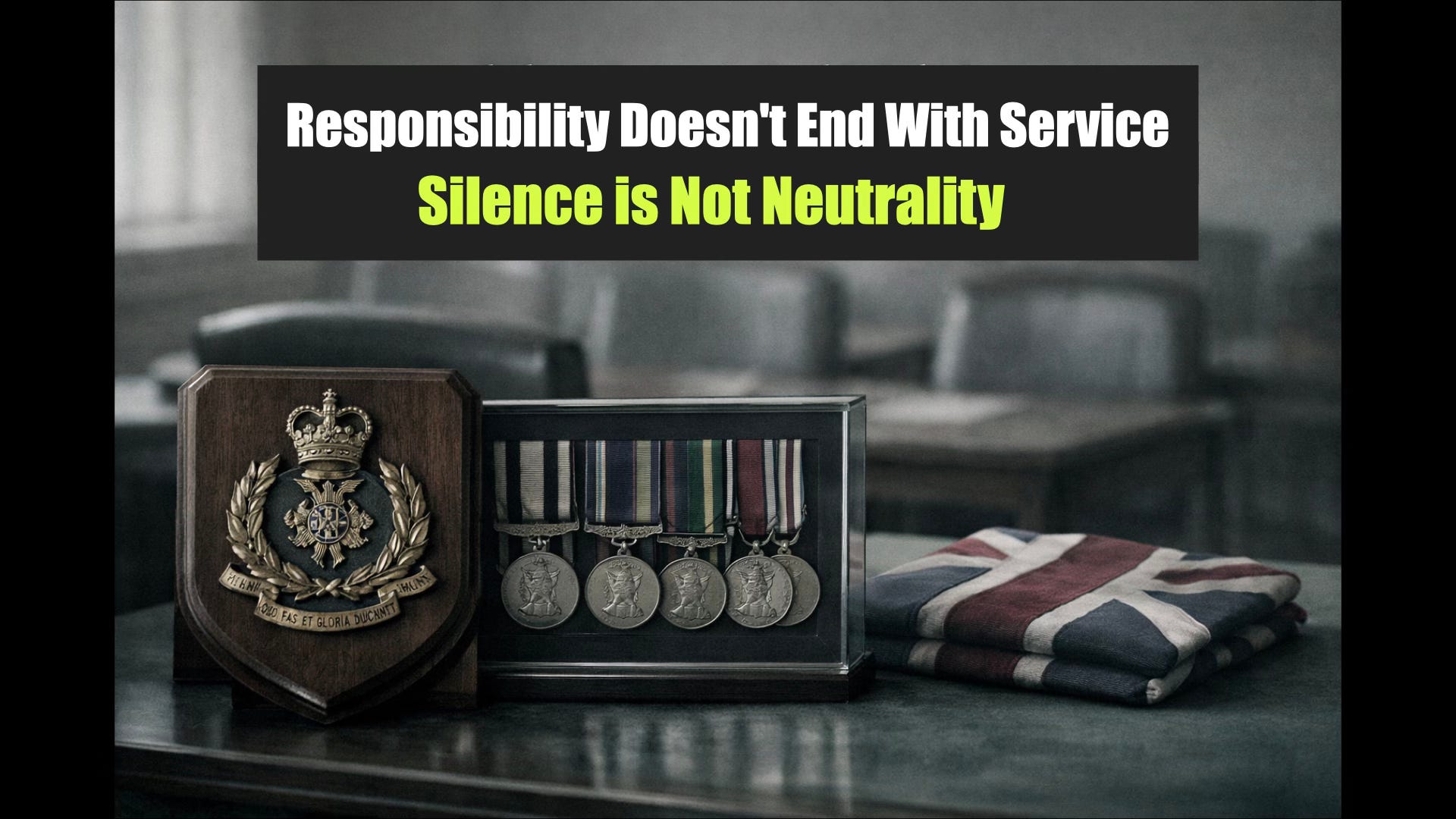
When Sir David Davis MP wrote to the Secretary of State for Defence, seeking an undertaking that the Ministry of Defence (MOD) would not interfere with Regimental Associations joining a campaign to stop the pursuit of Northern Ireland veterans through the courts, the response was unequivocal.
Alistair Carns, Minister for Armed Forces, responded as “the Minister responsible for this matter”, saying: “I can confirm that the Regimental Associations are not bound by official guidance that regimental websites and social media pages should be politically impartial.”
Were Sir David — or presumably anyone concerned about this matter — to contact Regimental Associations, Carns gave “an undertaking that no part of the MOD will interfere with you contacting them”.
You would have thought there would have been a flurry of activity that would follow.
Not so much.
Regimental Associations — and the Royal British Legion — appear to remain reticent to engage on the Op Banner lawfare issue.
There is, of course, a familiar line heard whenever Operation Banner and lawfare are raised within Regimental Associations or the Royal British Legion: “We must remain apolitical.”
On the surface, it sounds principled. These are institutions that represent men and women from across society, across political divides. They are not campaigning organisations. They are not there to endorse parties or candidates.
Fair enough.
But the difficulty is this: what is happening to Operation Banner veterans is not, in any meaningful sense, a party-political issue.
Describing it as such risks turning a position of neutrality into a habit of avoidance.
This is not about politics. It is about whether those sent to serve by the state can rely on that same state to treat them fairly afterwards.
That is a question of duty, not ideology.
Soldiers were deployed to Northern Ireland under lawful orders. They operated under rules of engagement set by the government of the day. They did not choose the conflict, the legal framework, or the political strategy.
They carried out the tasks they were given.
Decades later, many now find themselves subject to retrospective scrutiny in a legal and political climate that bears little resemblance to the one in which they served.
That is not a matter of left or right. It is a matter of fairness.
Regimental Associations exist, at least in part, to look after their own. The Royal British Legion exists to support serving personnel, veterans, and their families. Those purposes are clear enough in the context of welfare, remembrance, and community.
But what happens when the issue is not a matter of pensions or housing, but of legal jeopardy tied directly to service?
At that point, the line between “apolitical” and “absent” begins to blur.
There is an important distinction that needs to be made.
Political activity is about backing parties, endorsing candidates, or aligning with manifestos. That is rightly outside the remit of these institutions.
Institutional responsibility is something different. It is about ensuring members are treated fairly, supporting those facing service-related consequences, and upholding the integrity of the regiment and the reputation of those who served within it.
Engaging on Operation Banner lawfare sits firmly in the second category.
The argument that even this level of engagement is “political” does not really hold. If anything, it reflects a deeper discomfort. The issue is complex. It is contentious. It risks drawing criticism. It may require time, effort, and a willingness to step into difficult ground.
In short, it is work.
That is understandable. Large institutions tend towards caution. They prefer settled ground. They avoid internal disagreement where they can. But caution, left unchecked, becomes passivity. And passivity has consequences.
Because this is not a neutral space.
Lawyers, activists, and political actors are already shaping the narrative around Operation Banner. They are framing events, assigning responsibility, and establishing precedents that may endure for decades.
In that environment, silence is not neutrality. It is acquiescence.
There is also a forward-looking dimension that cannot be ignored.
If retrospective legal exposure of this kind becomes normalised, it will not remain confined to the past. It will shape how future soldiers think about service, risk, and trust in the chain of command. It will affect recruitment, morale, and individuals’ willingness to act decisively under orders.
That is not a historical concern. It is a live one.
None of this requires Regimental Associations or the Royal British Legion to become campaign organisations. No one is asking for slogans, marches, or media battles.
There are measured, professional ways to engage:
Issuing statements grounded in member welfare
Facilitating testimony from those affected
Providing private briefings to MPs and peers
Supporting calls for legal clarity and consistency
Educating members about the issues
Quiet, steady, factual engagement.
The sort of work these institutions have always done when they are at their best.
The question, then, is a simple one:
Are these organisations custodians of memory alone, concerned primarily with remembrance and ceremony? Or are they also guardians of their own people when those people face serious, service-related challenges?
If it is the former, then remaining “apolitical” makes perfect sense.
If it is the latter, then this issue cannot be set aside so easily.
There is a risk that “apolitical” becomes less a matter of principle and more a habit of institutional passivity. That is a harder truth, but it is one that needs to be faced.
Because at its core, this is not about politics. It is about responsibility.
And responsibility, unlike politics, cannot be avoided without consequence.
WHAT CAN YOU DO?
Send the following briefing note (you can download a copy here) to your Branch of your local Regimental Association and British Legion, and ask the question:
Are you a custodian of memory alone, concerned primarily with remembrance and ceremony? Or are you also guardians of your own people when they face serious, service-related challenges?
Your answer matters.
Briefing Note
Subject: Why engagement on Operation Banner lawfare is not political activity
Purpose
To clarify why Regimental Associations and the Royal British Legion can engage on Operation Banner-related legal issues without compromising their apolitical status.
Core Position
Engagement on this issue is not about party politics. It is about duty of care to members and the fair treatment of those who served under lawful orders.
Key Points
Not a party-political issue
No endorsement of any political party or candidate is required
The issue spans multiple governments and political cycles
The concern is structural, not ideological
A matter of duty and covenant
The state deployed personnel under lawful authority
Actions were taken within the rules of engagement set at the time
Retrospective legal scrutiny raises questions of fairness and consistency
Associations exist, in part, to support members facing service-related consequences
Clear distinction: politics vs responsibility
Political activity
Campaigning for parties, candidates, or manifestos
Institutional responsibility
Supporting member welfare
Addressing service-related legal and reputational issues
Upholding the integrity of the regiment and those who served
Precedent and future impact
Failure to engage risks establishing a norm of retrospective legal exposure
Potential implications for recruitment, morale, and trust in command
This is not only about the past, but about conditions for future service
The reality of non-engagement
Choosing not to act is still a form of action
Silence allows external actors to define the narrative unchallenged
“Apolitical” should not become a proxy for institutional passivity
A proportionate and appropriate role
Associations are not being asked to run public campaigns. Appropriate forms of engagement include:
Member welfare statements
Private briefings to MPs and peers
Facilitating testimony from affected veterans
Supporting calls for legal clarity and consistency
Time for Action
This issue sits squarely within the remit of organisations established to support those who served. Engagement can be measured, professional, and non-partisan. The central question is straightforward:
Can those sent to serve by the state rely on that same state to treat them fairly afterwards?
Addressing that question is not political activity. It is a matter of responsibility.
Running a campaign or want to dig deeper?
You can download a Word document copy of the briefing note here: Briefing Note
Download the discussion notes here: Association and RBL Engagement Discussion.
"There is no surer way for evil to succeed than if good men do nothing."
Edmund Burke
Despite the best efforts of many, including the British Armed Forces Federation, UK veterans have never yet been represented by an independent body. Perhaps the time has come to finally make a concerted effort for self determination and expression in order to make sure that two million voices are heard?