

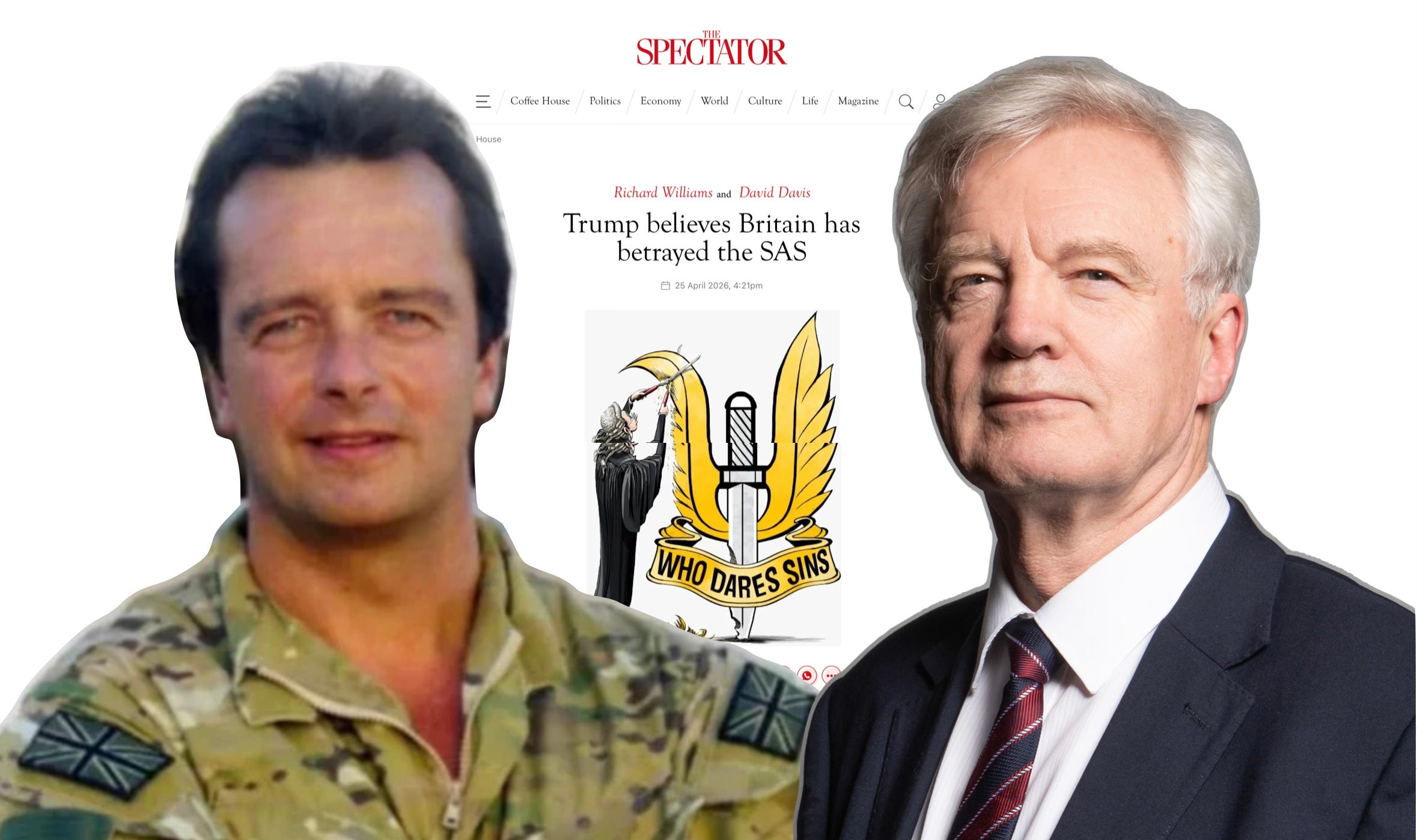
There are moments when a single piece of reporting cuts through the noise and exposes something deeper. A recent Spectator article by Richard Williams (who commanded 22 SAS from 2005 to 2008) and Sir David Davis (an experienced parliamentarian and SAS reservist) is one such moment.
After a recent visit to Washington, meeting politicians on both sides of the political divide, and military and intelligence services people, their central claim is stark: American political, military, and intelligence figures increasingly believe that Britain has betrayed its own special forces—and, in doing so, weakened the alliance itself. That is not media blather. It is a strategic warning.
Lawfare and operational risk
From Northern Ireland to Syria and Afghanistan, UK Special Forces have operated at the very sharp end of protecting the nation. Since 2001, US-UK integration has brought cutting-edge technology and tactics to chronically underfunded British units. That partnership is now fraying.
Decades-old counter-terrorist operations — where hesitation would have meant death — are being reopened under the Northern Ireland Troubles Bill and misapplied human rights legislation. Veterans are forced to defend split-second decisions taken under fire.
SAS squadrons are understrength
Experienced warrant officers are leaving in droves
Recruitment for gruelling selection courses is collapsing
The practical outcome is immediate: the UK cannot provide the manpower or reliability that American counterparts expect. Some US operators are reportedly considering whether it might be safer to operate without UK forces, rather than risk hesitation due to legal exposure.
Propagandising the past
Their article revisits infamous incidents, such as Loughgall (1987), Coagh (1991), and Clonoe (1992). These were live-fire engagements designed to prevent lethal attacks. Veterans who acted decisively are now subjected to lawfare, decades after the fact.
Patrick Kelly’s squad at Loughgall confronted an IRA unit responsible for hundreds of killings. A fresh inquest, promised by Hilary Benn, does not seek to examine tactics or intent — it serves as a propaganda victory for those who opposed the state.
The article points out: “Kelly’s family peddles the narrative that they ‘went to blow up, not to kill’, an extraordinary claim given that they used a 400-pound bomb to destroy the police station, with the police officers inside. A scout involved in the attack confirmed: ‘The point of the [IRA] operation was to get in before they [the RUC officers] left, to take them out.’”
Strategic consequences
The consequences extend beyond individual veterans:
UK Special Forces are weaker than ever
The US may limit or withdraw operational cooperation
Intelligence sharing and joint mission trust is eroding
Britain risks becoming a second-tier partner in counter-terrorist operations
Veterans are at the sharp end of the state’s failure. Legal attacks, stress-induced illness, and reputational damage accumulate while national security itself is undermined.
A moral and operational crisis
Washington’s concern is practical: hesitation or legal entanglement could compromise operations. Britain’s enemies never forced the SAS to hesitate. Its own government is achieving what no terrorist could: turning the nation’s finest into political targets and operational risks.
This is not abstract politics. It is a strategic misstep with real-world consequences: lost trust, lost capability, and lost credibility with allies.
If Britain continues down this path, the very men who keep the nation safe will be sidelined by fear of legal repercussions, leaving the country more exposed than ever.
Veterans are not just history.
They are the present.
And a harbinger of many brave soldiers’ futures.
President Trump is going to have to take direct US Military action to protect and defend British Military veterans against the rogue U.K. establishment and U.K. state - US Military Intervention and assistance to put a U.K. military government into power seems the only real solution
A great article in The Spectator exposing the risk to UK USA SF and diplomatic relations. Now there is a focus on the impact on UK relationship with USA we must discern which (country or countries) globally benefit from this rift? There is a saying that 'one stick is easy to break - but a bunch of sticks is impossible'. As a small island we need big friends that speak our language. Who is it that is determined to split the UK and USA? Starmer is not clever enough to tie his shoe laces - he is just someone's useful idiot.