

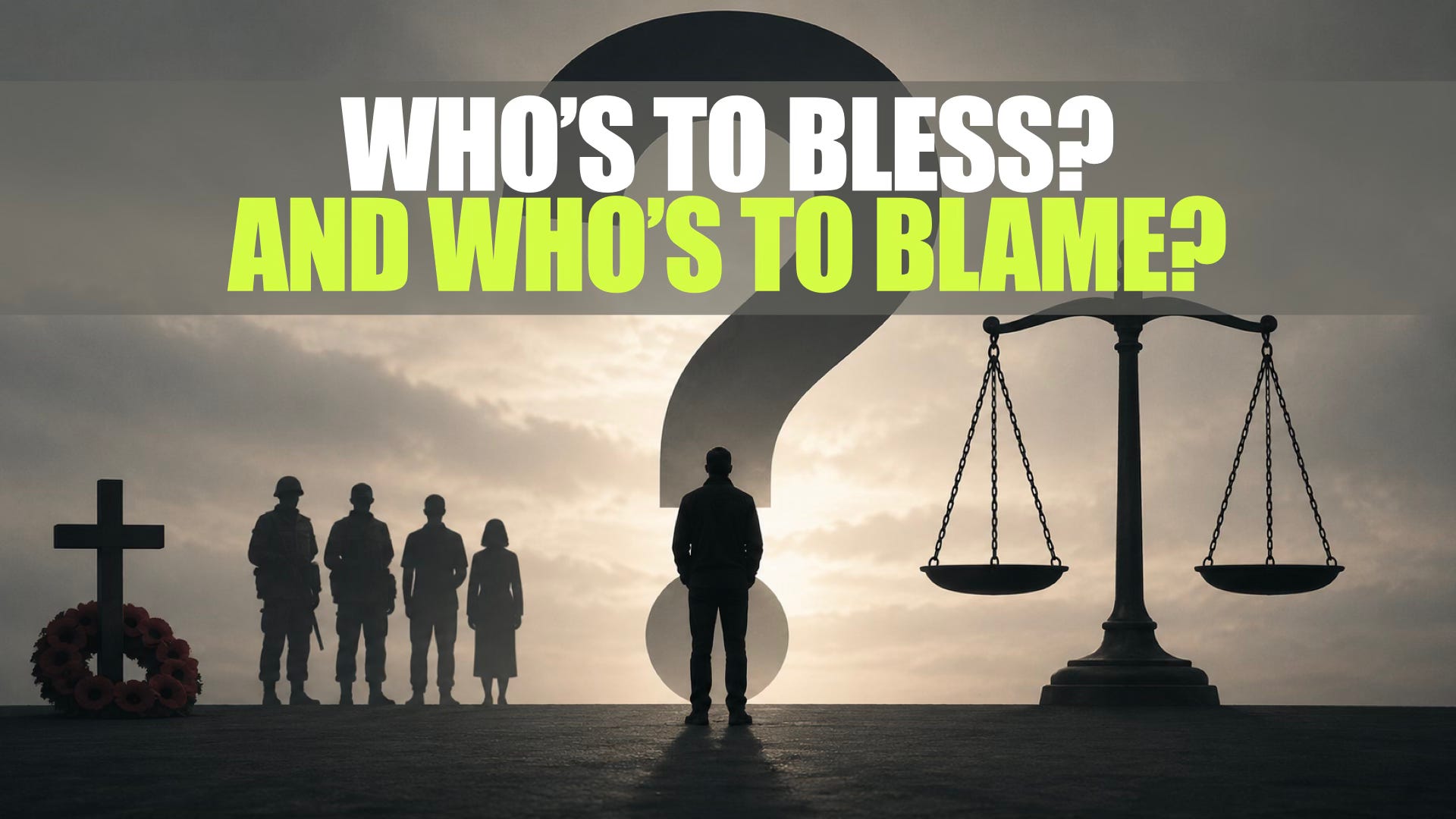
Asking who a victim is sounds like a simple question.
In Northern Ireland, it is one of the hardest questions of all.
Secretary of State Hilary Benn speaks constantly of victims seeking justice, but appears to rely on inherited or assumed categories rather than setting out a hard definition of victimhood. When challenged, he reassures rather than defines.
What he tends to do is use broad moral language: “victims”, “families”, “victims and survivors’ groups”, “families who lost loved ones”, and those seeking “information, accountability and acknowledgement”.
The closest he gets is functional rather than definitional. He says the Troubles Bill must work for “victims of terrorist violence across the United Kingdom, families of many of those who were killed, former members of our security services — and many more”.
The weakness is obvious. When Jim Allister challenged him on the point that “victims and survivors” were undefined in the Bill, Benn did not define the terms.
“The Secretary of State says that the [victims] group will not include any former paramilitaries, but where in clause 8—or elsewhere—is there a prohibition on such participation? said Allister “The clause is about victims and survivors, and those terms are undefined,’ Under our current iniquitous definition, a victim could be somebody who made themselves a victim by blowing themselves up with their own bomb. According to the clause, such a person could serve on the advisory panel.
The best Benn could offer was an assurance that anyone “previously involved in paramilitary activity would not be appointed to the victims and survivors group”.
What is striking in all this talk is how rarely the underlying issue is addressed.
Who counts as a victim?
Someone killed by terrorists?
A soldier?
A police officer?
A civilian caught in violence?
A person injured in a punishment shooting?
A family driven into exile?
Someone psychologically harmed?
Someone with a criminal record who was nevertheless subjected to political violence?
This week, the High Court ruled that a man shot by the IRA and forced to flee with his family was unlawfully refused a victim's payment because decision-makers adopted too narrow an approach to what constituted a Troubles-related incident.
The judge recognised that paramilitary violence did not always have a single motive.
That matters because Northern Ireland still struggles to distinguish crime, coercion, punishment, intimidation and political violence.
The problem is not academic.
Victimhood determines recognition.
Recognition influences funding.
Funding shapes institutions.
Institutions shape memory.
And memory influences policy.
Victims sector industry
The victims sector itself is now increasingly becoming part of the story.
Recent reporting has raised concerns within parts of the sector regarding governance, grievance handling, accountability, and oversight. In one case, complainants welcomed the Charity Commission’s findings but expressed concern that the recommendations would not be publicly recorded, arguing that the scrutiny expected of others should also apply within the sector itself.
Separately, the President of the Victims’ Payments Board has publicly acknowledged deeper tensions around victimhood, arguing that local politics never reached an agreement on definitions and that the current scheme satisfied few people.
This is not an argument against victims.
It is an argument for clarity.
Veterans notice something else.
When politicians invoke victims, discussion often centres on civilians and families.
Far less often does it ask whether former soldiers and police officers, sent by the state and later exposed to decades of investigation and process, also sit within that moral frame.
Operation Banner not only created casualties.
It created competing definitions of victimhood.
Thirty years later, Britain still appears unable to say where the line is drawn.
To my mind, the whole situation is bonkers. The history of Northern Ireland has always been messy. From the day I and my recce platoon led 1 PWO into Londonderry on 14 August 1969 to be embraced by the mothers of rioting Bogside Catholic boys and brought out cups of tea and cake for our lads for thanking them for saving their sons and husbands from the hated B-Specials, the last 57 years has been a stew pot of Apocalypse Now, Alice Through The Looking Glass and Catch 22. From 10 April 1998, when the defeated IRA were handed get-out-of-jail-free cards, common sense really did ceased to apply. To have reached the stage now, 28 years later, where it is necessary to labour the definition of the word victim is simply mind-blowing.😖
The Secretary of State for Northern Ireland; Hilary Benn is an absolute dogmatic, ill informed fool! He only 'Reads from a Book that he's Written!' His narrow way of thinking is condescending and dangerous! The Veteran Community does not need people like Benn. He's the 'Victim' of his own corrupted philosophy!! Veterans will never be victims, because they are Warriors! 💪💪