

The resignations of John Healey and Al Carns do not change the legislation facing veterans.
The Bill remains before Parliament. The Government’s policy remains unchanged. The investigations, inquests and legal processes that concern many veterans remain very much alive.
Yet it would be a mistake to conclude that nothing has happened.
Something important has changed.
For the first time since the Government began advancing its Troubles legacy proposals, opposition to key elements of the approach has emerged publicly from within the Government itself.
That matters because the debate is no longer confined to veterans’ groups, campaigners, commentators or opposition politicians. It has now entered the parliamentary record through the words of a former Defence Secretary and a former Minister for the Armed Forces.
Veterans should be careful not to exaggerate the significance of the resignations.
But neither should they underestimate it.
The most immediate effect is political.
Until now, ministers could largely characterise criticism of the legislation as coming from outside Government. That position has become more difficult to sustain.
Al Carns, in particular, used his resignation statement to articulate concerns that many veterans have expressed for years. He argued that the state’s duty to those it sends into harm’s way does not end when the uniform comes off. He warned that endless legal processes risk undermining the contract between the nation and those who serve it. Most significantly, he challenged the strategic wisdom of a system that risks portraying the state as the aggressor while imposing continuing burdens on those who served under lawful orders.
Whether one agrees with every aspect of his argument is almost beside the point.
The significance lies in the fact that the argument has now been made from inside Government by a former Armed Forces Minister with extensive operational experience.
That creates a new political reality.
Political Consequences
It does not mean veterans have found a champion.
It does not mean the Bill will be withdrawn.
It certainly does not mean that veterans should suddenly forget their concerns.
What it means is that the Government can no longer plausibly present this debate as a disagreement between ministers and outside critics.
There is now visible disagreement within the governing party itself.
The second consequence is strategic.
The veteran argument has often been caricatured as being about prosecutions.
Many veterans would argue that this misses the point entirely.
The concern has never been limited to the possibility of conviction. The concern is that repeated investigations, inquests, reviews and legal processes can themselves become a form of punishment, regardless of outcome.
Folks have repeatedly described this as “the process is the punishment.”
Carns has now placed a version of that argument firmly on the parliamentary record.
That does not resolve the issue.
But it makes it harder to ignore.
The third consequence concerns the wider political environment.
A Matter of Timing
The timing of the resignations is also notable. As Parliament debates the future of legacy investigations, evidence given this week by senior figures within the ICRIR suggests the system is already facing significant operational challenges.
Sir Declan Morgan warned Stormont’s Executive Office Committee: “If we end up in a situation where we have half the resource that we need to do the job, we are in trouble.”
As Carns told the BBC: “We have neither the political capital nor the resources to spare for this unjust journey.”
Carns’s warning about years of inquiries, inquests and investigations therefore lands in a very different context. The debate is no longer simply about what the Government intends to build. It is increasingly about whether the institutions tasked with delivering that vision possess the resources, authority and cooperation required to make it work.
For veterans, this raises an obvious question. If existing structures are already warning about resources, cooperation, and capacity, what confidence can there be that an expanded framework will deliver the certainty, finality, and fairness that have repeatedly been promised?
That question remains unanswered.
Perhaps most importantly, the resignations expose a deeper issue.
Veterans are often told that legacy policy is a matter of law.
Yet the events of the past week demonstrate that it is mostly a matter of politics.
Legislation can be amended.
Government priorities can change.
Political pressure can alter outcomes.
View From the Veteran Side
For veterans, the immediate question is not whether the resignations are dramatic. They are. The question is whether they create leverage.
They may do.
There are signs that the Bill could return to the Commons before the Summer recess. Nothing is certain, but the possibility matters. If the Government tries to move quickly, the veteran side of the debate cannot afford to wait.
The priorities are practical.
First, if the Remedial Order reaches the House of Lords, it should not pass through unnoticed. It should be debated.
Secondly, MPs need to see the amendments the Government says it intends to bring forward. The concern is that those amendments may fall short in two crucial areas: new evidence not being scrutinised by a Supreme Court judge, and the possible restart of 31 inquests without adequate protection for veterans.
Thirdly, MPs, especially Labour MPs, need to hear from veteran constituents before Committee Stage. This is not about mass lobbying or manufactured outrage. It is about ensuring MPs understand that this issue affects veterans, military families, and the broader relationship between the state and those who served it.
That may be the most important consequence of the resignations.
They have created a space where veteran concerns can no longer be dismissed as partisan noise or external campaigning. But that space will not remain open indefinitely.
If the veteran side of the debate is disciplined, it can use this moment to press three simple questions:
What safeguards prevent process becoming punishment?
What protections exist for veterans facing revived inquests or repeated investigations?
What is the Government doing to ensure that the state does not impose costs on those who served while imposing no equivalent cost on those who used terrorism?
Those are not abstract questions.
They are the questions MPs now need to answer.
The Debate Will Continue
The fact that ministers have resigned over matters touching defence, national security and the treatment of veterans demonstrates that these questions are not merely technical legal exercises. They involve judgments about national priorities, obligations and the relationship between the state and those who serve it.
None of this means veterans should become complacent.
The legislation remains.
The central questions remain.
Will there be effective safeguards against repeated investigations?
Will there be meaningful protections against process becoming punishment?
Will new evidence be subject to appropriate scrutiny?
Will the proposed framework deliver balance, or simply create new mechanisms for continuing disputes about the past?
Those questions are every bit as important today as they were before the resignations.
What has changed is the political context.
Veterans now know that concerns once dismissed as external criticism have been voiced from within the highest levels of Government itself.
The significance of the resignations, therefore, lies not in what they have achieved but in what they reveal.
They reveal that the debate is far from settled.
They reveal that disagreement exists at the heart of Government.
And they reveal that the relationship between the state and those it sends into harm’s way remains a live political issue, not a closed chapter.
For veterans, that may prove to be the most important development of all.
Related Analysis:
Why Veterans Are Watching Al Carns Closely
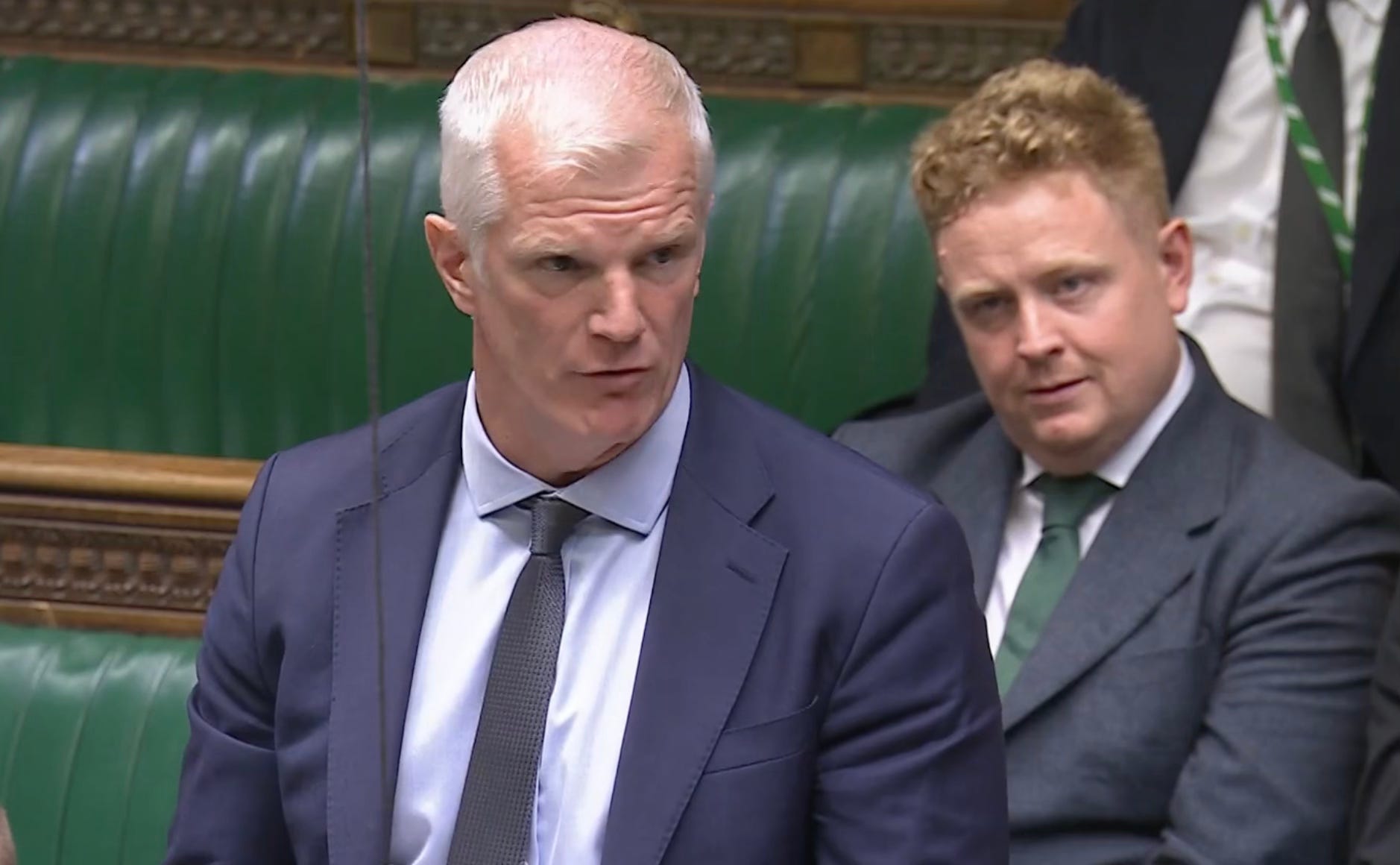
Al Carns’s resignation has triggered a debate among veterans that goes beyond the speech itself.
For some, Carns represents something that has been largely absent from British politics in recent years: a politician with recent operational military experience willing to sacrifice ministerial office over matters of principle. His decision to publicly challenge the Government’s approach to legacy investigations has led some veterans to see him as a potential ally and perhaps a future advocate within Parliament.
Probably the single most important sentence in the entire speech from a veteran perspective is: “A country owes a duty to those it sent into harm’s way under lawful orders, and that duty does not end when the uniform comes off.”
This captures the wider principle at stake and will resonate far beyond the immediate debate over the Bill.
It is also going some way to winning back veterans.
As respected former SAS RSM, George Simm, notes in a LinkedIn post, Al Carns and the Return of Leadership, he was “heartened to hear Carns deliver a perfect example of old-fashioned leadership”.
Simm reckons that leadership, which has been missing from politics for so long, has become almost extinct.
“For those of us from the military, his speech came as no surprise,” says Simm.
“Al Carns has commanded men on operations: the ultimate test of leadership and moral courage. His speech displayed a clear personal centre of gravity, a definition of the problem, a sense of purpose, and a vision for how he intends to address it. I suspect many on both sides of the House were also struck by the clarity of his words and this unfamiliar thing called leadership.”
That said, the Bill remains before Parliament. The policy remains Government policy. Veterans facing investigations, inquests and legal uncertainty remain in exactly the same position they occupied before the resignation.
As a result, many veterans are adopting a cautious position.
They welcome the fact that a former Armed Forces Minister has publicly acknowledged concerns that have often been dismissed or marginalised. They recognise the significance of a serving Government minister resigning and then describing the treatment of veterans as inconsistent with the nation’s duty to those it sent into harm’s way.
At the same time, they remain focused on outcomes rather than personalities.
Several signs suggest that Carns’s intervention has been taken seriously within veteran circles:
His resignation letter and Commons statement have generated extensive discussion across veteran networks.
Senior veterans and former military leaders have publicly welcomed elements of his analysis.
His comments have reinforced wider concerns about “process as punishment”.
His intervention has placed the veteran argument firmly on the parliamentary record.
He has created a visible political distance between himself and the Government’s approach to legacy issues.
Yet the central question remains unanswered:
What happens next?
Veterans are not looking for another sympathetic speech. They are looking for practical safeguards, meaningful protections and evidence that concerns raised over many years are being addressed.
For that reason, Carns is not seen as a proven champion, but as a potential ally whose future credibility will depend on whether his words are followed by action.
Maybe the resignations will have some positive impact on how this bill moves forward? But let's not forget this current Labour Government led by the 'King of Numptys!' himself; Starmer are fighting for their own survival! They are prepared to sacrifice the rights of veterans' and keep this fucking disgraceful affair hanging in the air. It's been far too long! Those who have the ultimate power to make this issue go away, are 'hiding under the blankets' and do not have the backbone to act and support us!