
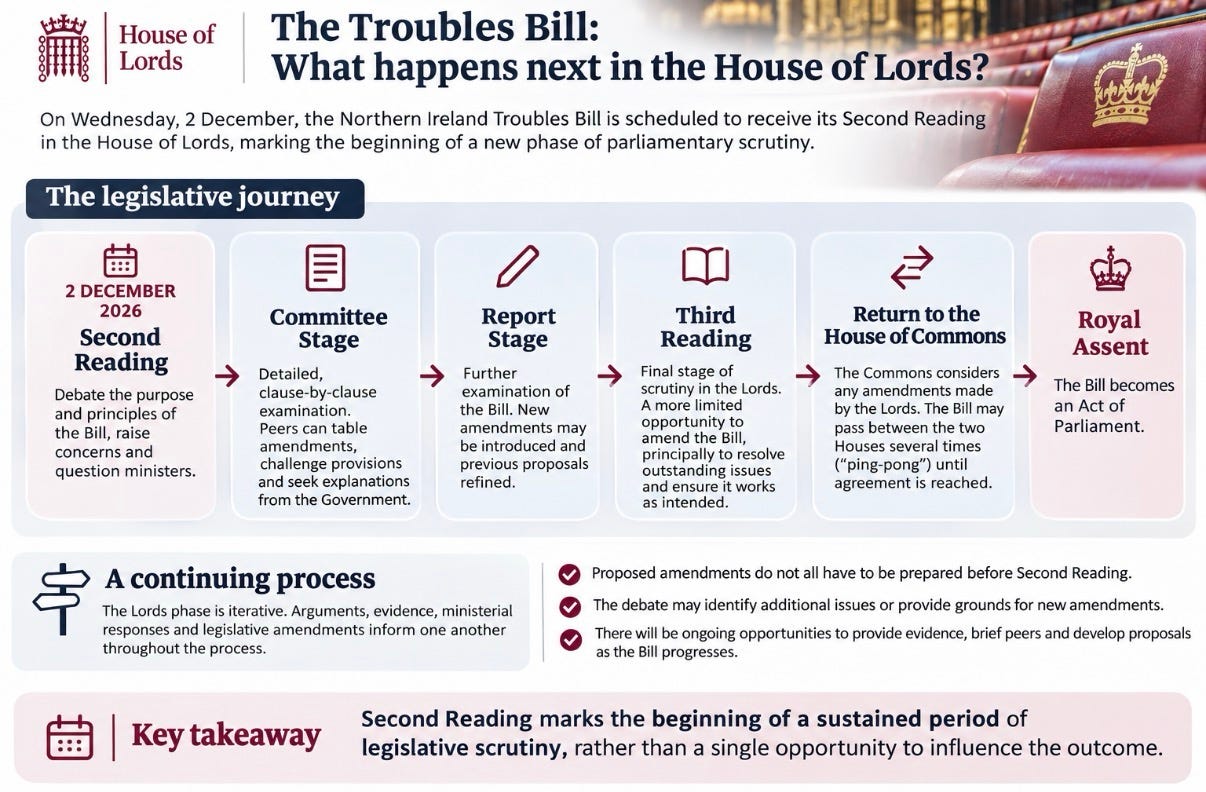
On Wednesday, 2 December, the Northern Ireland Troubles Bill is scheduled to receive its Second Reading in the House of Lords, marking the beginning of a new phase of parliamentary scrutiny.
The legislative process in the Lords provides several opportunities to examine the Bill, challenge its provisions and propose changes.
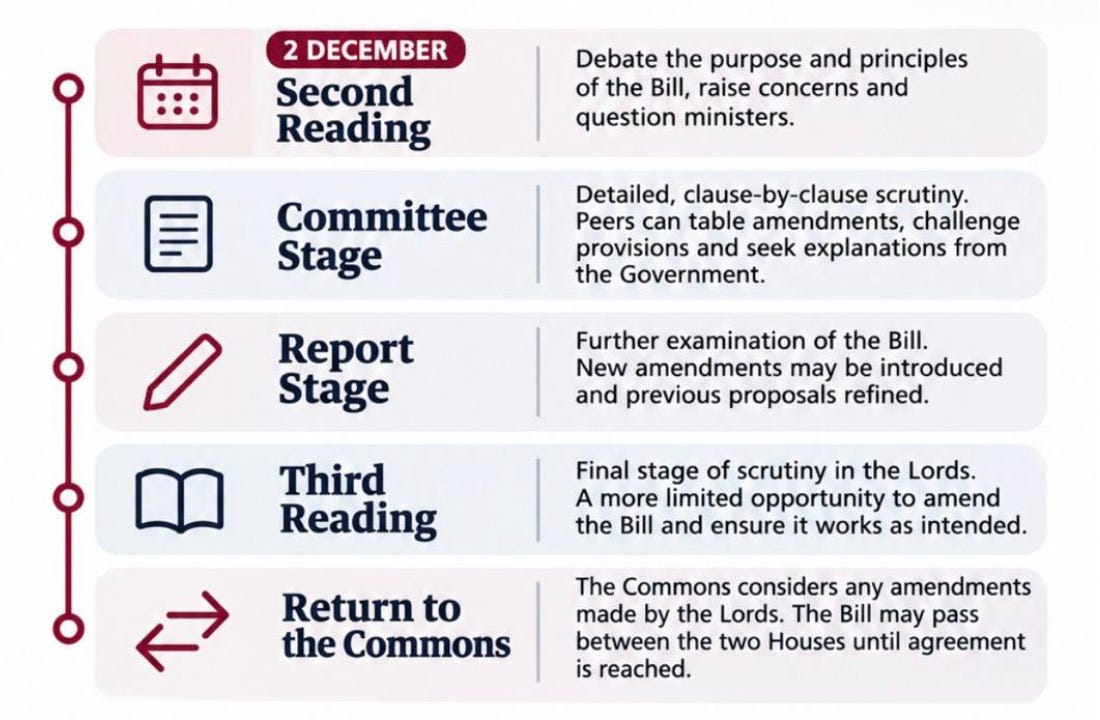
1. Second Reading
Peers debate the purpose and principles of the Bill. They raise concerns, identify weaknesses and question the Government about its intentions.
This is an important opportunity to establish arguments on the parliamentary record. The Government’s responses may also inform the development and wording of subsequent amendments.
2. Committee Stage
The detailed examination of the legislation begins.
The Government proposes that the Troubles Bill be considered by a Committee of the Whole House, meaning that any peer may participate.
During this stage:
Individual clauses and schedules are examined.
Peers can introduce amendments.
Ministers must respond to arguments raised during debate.
Amendments may be withdrawn or put to a vote.
Further proposals can be developed in response to the discussions.
3. Report Stage
The Bill returns to the House for further examination.
New amendments may be introduced, and amendments discussed during Committee Stage can be refined and brought forward again.
This provides an opportunity to address outstanding concerns and build agreement around specific legislative changes.
4. Third Reading
This is the final stage of scrutiny in the Lords. There remains a more limited opportunity to amend the Bill, principally to resolve uncertainties, close loopholes and ensure the legislation operates as intended.
5. Return to the House of Commons
Any amendments made by the Lords must be considered by the Commons.
The Commons may accept, reject or propose alternatives to those amendments. The Bill may pass between the two Houses several times — a process known as parliamentary ‘ping-pong’ — before agreement is reached.
The legislative journey
A continuing process
The Lords phase is iterative. Arguments, evidence, ministerial responses and legislative amendments inform one another.
Proposed amendments do not all have to be prepared before Second Reading. Indeed, the debate may reveal additional issues requiring attention or provide grounds for developing entirely new amendments.
Throughout this period, veterans and their supporters will have opportunities to provide evidence, brief peers, explain concerns and examine the Government’s responses.
Engagement with MPs also remains relevant, particularly given that any amendments made by the Lords will subsequently return to the Commons.
Second Reading marks the beginning of a sustained period of legislative scrutiny, rather than a single opportunity to influence the outcome.
Procedural note, 28 November 2026: Lord Caine has proposed that a formal public consultation in Northern Ireland take place before Committee Stage begins. Whether this proceeds will depend on the decision of the House. Dates for subsequent stages have yet to be confirmed in the published timetable.