

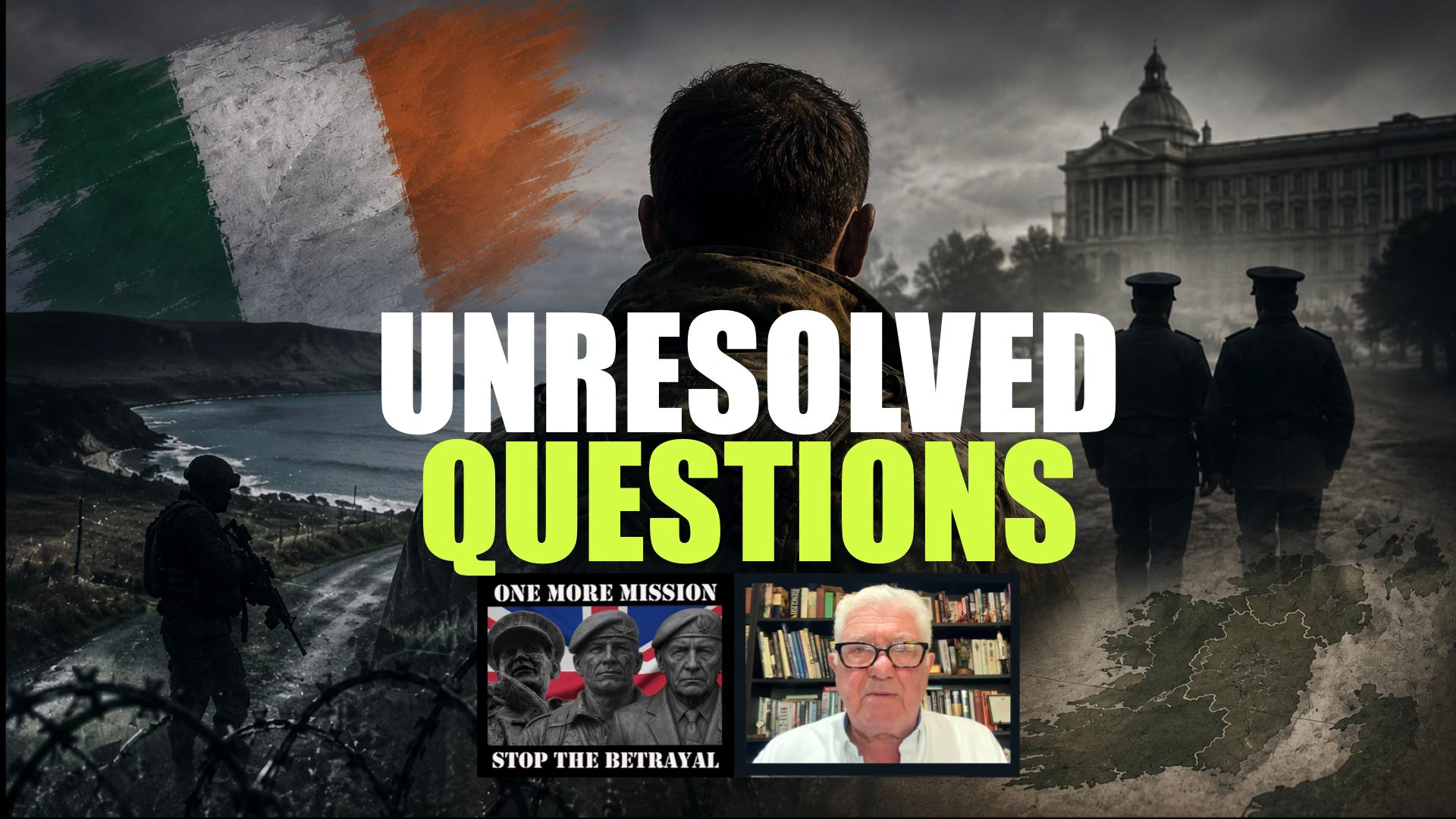
Who writes the history of Operation Banner?
And who decides which parts are remembered, forgotten or left unexplored?
In the latest episode of One More Mission, former Parachute Regiment officer Lt Col Simon Barry joins the discussion to examine one of the less discussed dimensions of the Troubles:
The role of the Republic of Ireland and how that role is understood within today’s legacy debate.
The discussion explores:
• The Republic’s place in the conflict and the tension between peace process memory and conflict-era realities
• Cross-border policing, extradition and operational friction
• The murders of RUC Chief Superintendent Harry Breen and Superintendent Bob Buchanan in 1989 after a meeting in Dundalk, and the questions later raised by the Smithwick findings on Garda collusion and cross-border security
• Recent intervention by Jon Burrows MLA in the Northern Ireland Assembly and wider questions around legacy investigations, institutional limits and the distinction between investigation and adjudication
• Process, precedent and why veterans continue to raise concerns about confidence in legacy mechanisms
• Whether an honest legacy can exist without examining all actors and all dimensions of the conflict
This conversation is not presented as the final word.
It is part of the wider record.
Justice for Veterans exists as an authority archive and catalyst preserving evidence, testimony, process and precedent around Operation Banner and its continuing relevance.
Because the question is not simply what happened.
It is how that history is understood now — and what lessons it leaves for future generations.
Listen now:
Find the full episode here:
WATCH

LISTEN


Well said Colonel. We have to stop Benn and stop this onslaught against veterans. 100% with you.
Hello Folks. And yet again, it takes a Para Regt Officer to troll through all the 'Political toxic Garbage' that is trying to cripple and deny the truth! The brave men and women who Saved our Nation from more death and destruction, in both Northern Ireland, the British Mainland and beyond. Are being manipulated by toxic actors, led by an incompetent Prime Minister, aligned with other actors in the Irish Republic. There was obvious collusion, and or with Terrorists, namely the IRA, or PIRA. The history and nature of all operations against the enemy. Tells a story of professionalism, bravery and absolute dedication to duty. To subdue and arrest the Enemy. When this was not possible they were neautralised according to the Rules of Engagement, It's obvious that Special Forces Operations are being targeted because of the sometimes aggressive nature of the Enemy, where positive and affirmative action was the only solution to stop them, and yes, casualties were inflicted! Let's just clarify that the so called 'Troubles' was in fact a 'limited war' against a determined enemy! So, why is this government dithering and not supporting the Veterans? Clearing the way and putting this sordid affair where it belongs? In the Trash Bin!