

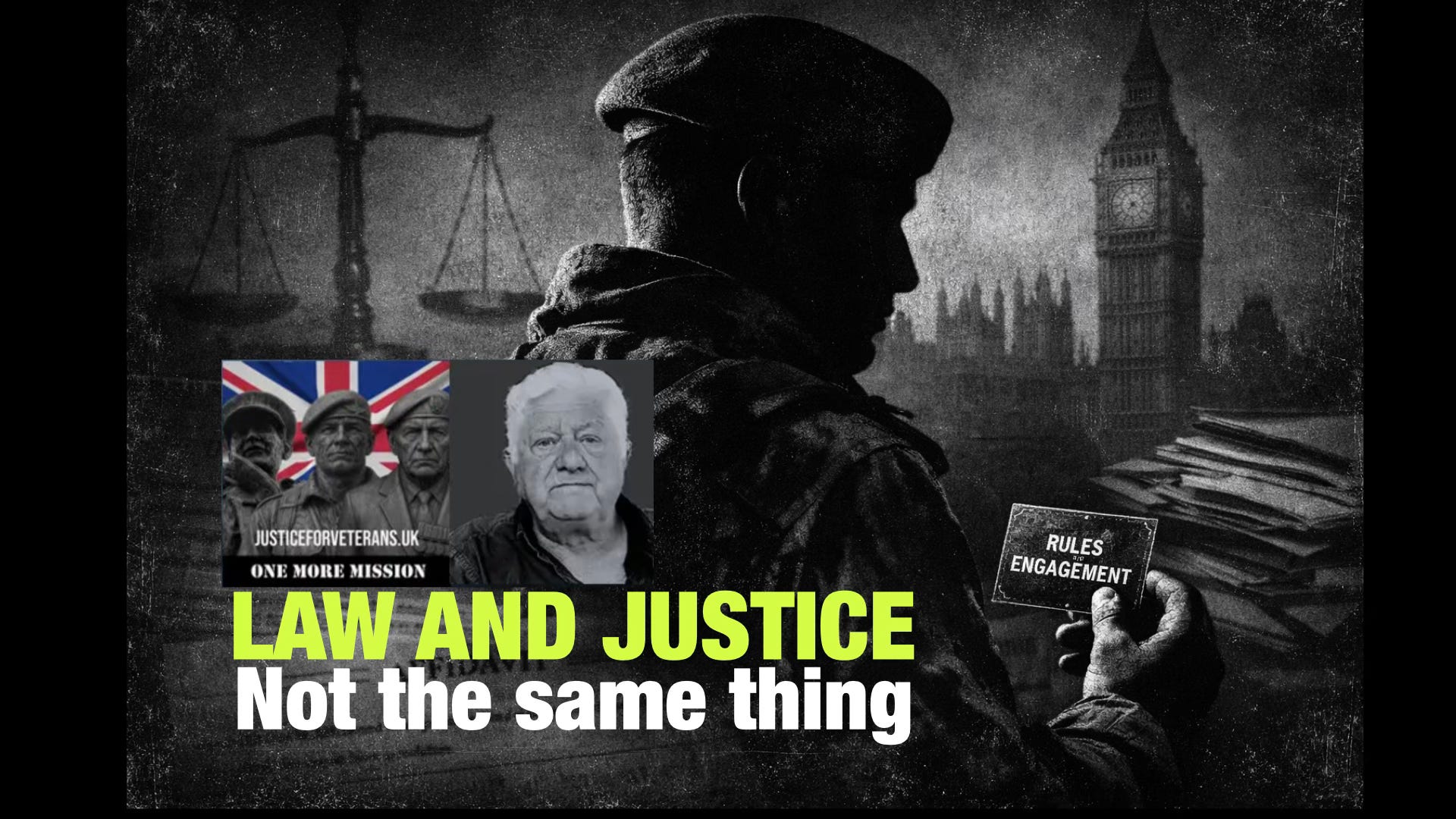
What did the rules of engagement really look like on the ground in Northern Ireland —and how do they compare to the legal standards now being applied decades later?
In this episode of the One More Mission podcast, former Parachute Regiment officer Simon Barry provides a measured but uncompromising account of how soldiers were trained, how decisions were made, and why today’s legal framework risks stripping away the very context those decisions depended on.
From the “yellow card” and the principle of minimum force to the growing concern over what many veterans see as a two-tier system of justice, Barry argues that the current legislative direction is not closing the past but reopening it. The result, in his view, is a system that risks privileging narrative over truth and process over fairness.
The conversation moves beyond legal technicalities into something more fundamental: the difference between law and justice. It also raises a practical question — what can actually be done now?
The answer is straightforward. Veterans and supporters must engage directly with MPs, making the case in person and restoring context where it has been lost.
This is not an abstract debate. It is about how history is understood, how service is judged, and whether those who operated under strict rules are treated with the fairness they were expected to uphold.
Listen to the full episode here:


