

At its core, former Parachute Regiment Lieutenant Colonel Simon Barry’s argument is straightforward: The proposed legislation does not resolve the legacy issue. In fact, it risks making it worse.
The 2023 Legacy Act, for all its imperfections, attempted to draw a line — an acknowledgement that Northern Ireland’s past could not be endlessly re-litigated without cost.
The current direction does the opposite.
It reopens inquests, invites repeat investigations without new evidence, and creates the conditions for sustained legal action that can stretch into the future for decades.
That shift matters.
It changes the trajectory from closure to permanent process.
What emerges from the conversation is not a demand for immunity, as is often suggested, but for something more basic:
A clear time limit on investigations
No reopening of cases without genuinely new evidence
Proper distinction between lawful state actors and terrorists
A system that does not incentivise legal action for financial or political gain
Without those guardrails, the result is predictable. The process remains the punishment.
There is also a growing recognition—reflected in the discussion—that public sentiment is beginning to shift. Barry points to moments when the issue has broken out beyond veteran circles and reached wider audiences, including defence forums and public debate. The message is starting to spread, but not far enough yet.
That gap matters.
One of the recurring concerns in the episode is the risk that the issue will remain contained within a “veteran echo chamber.” The conversation stresses the need to reach beyond that — into communities, associations, and public discourse where understanding is still forming.
The stakes are not abstract.
If nothing changes, the likely outcome is:
Continued legal exposure for junior ranks and frontline personnel
Increasing use of litigation as a mechanism of pressure
No meaningful prospect of closure for most cases
A one-sided evidential landscape, where state records are used, but terrorist records are absent
That last point is often overlooked. The system being created relies heavily on documentation — and only one side kept it.
The discussion also returns to a central imbalance that continues to drive concern:
Terrorist actors received comfort letters, amnesties, and political accommodation
Veterans and police face ongoing legal uncertainty decades later
That is not a technical flaw.
It is a structural one.
Running through the episode is a consistent theme: this is not about relitigating the past for its own sake. It is about responsibility, balance, and the basic principle that those sent to act on behalf of the state should not be left carrying the burden alone.
Barry distils it to a single line drawn from recent commentary:
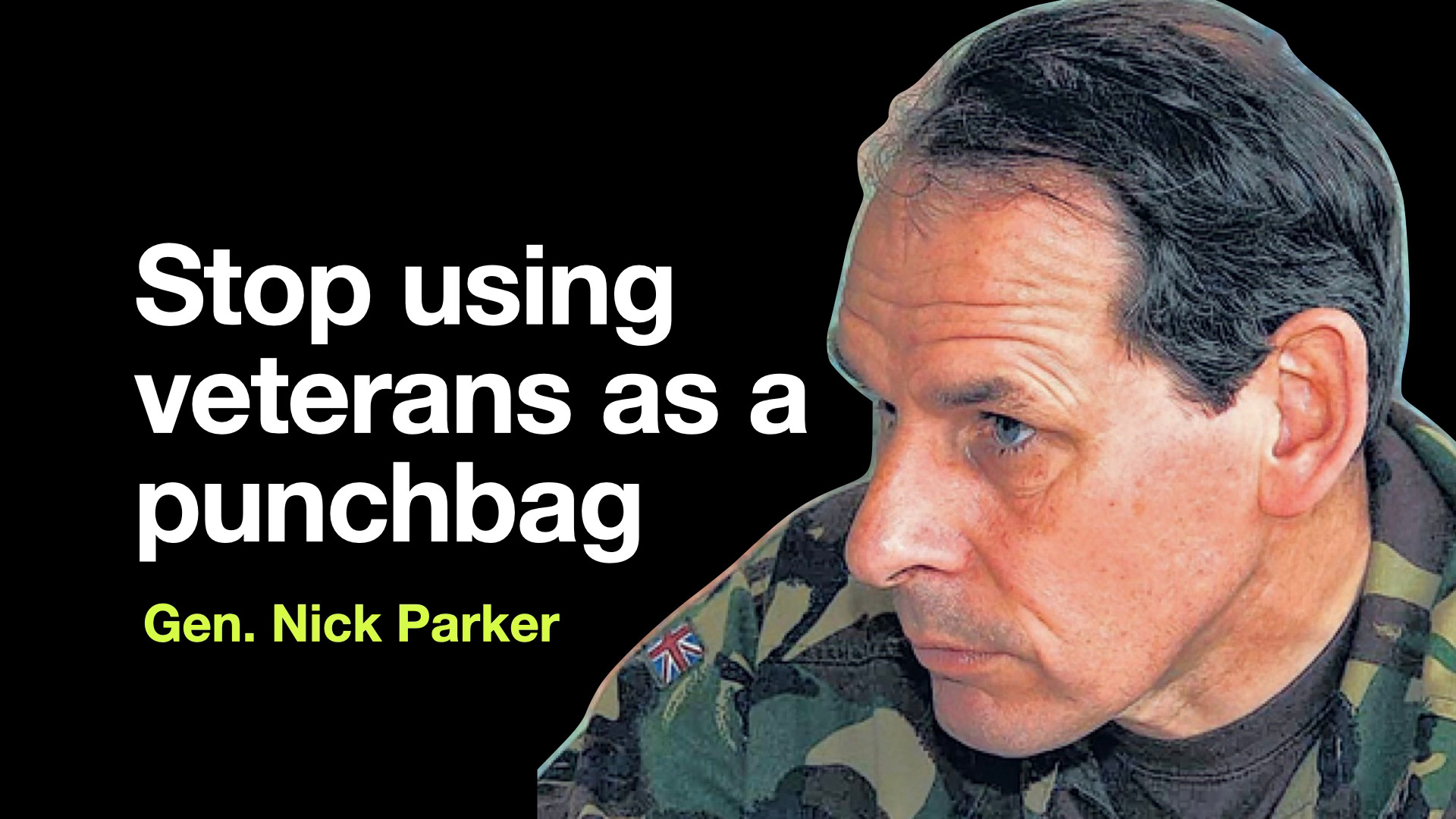
“Stop using veterans as a punch bag.”
The episode is worth listening to in full. It avoids slogans and deals directly with the mechanics—how the system works, where it is heading, and who ultimately bears the cost.
Listen to the full podcast here:


This PM will soon be gone and his interference in the Northern Ireland issue should be then immediately outlawed. Starmer is a disgrace to our country and to our troops.
The national dailies, in particular the D Tel, Express and Mail are providing regular and consistently good coverage which, in my view, is invaluable support for veterans from 'heavy artillery' because it overcomes the echo-chamber prob and gets the message out to a big audience in the public arena. This is now getting traction. At the other end of the scale, there's a lot of good stuff on Fb.