

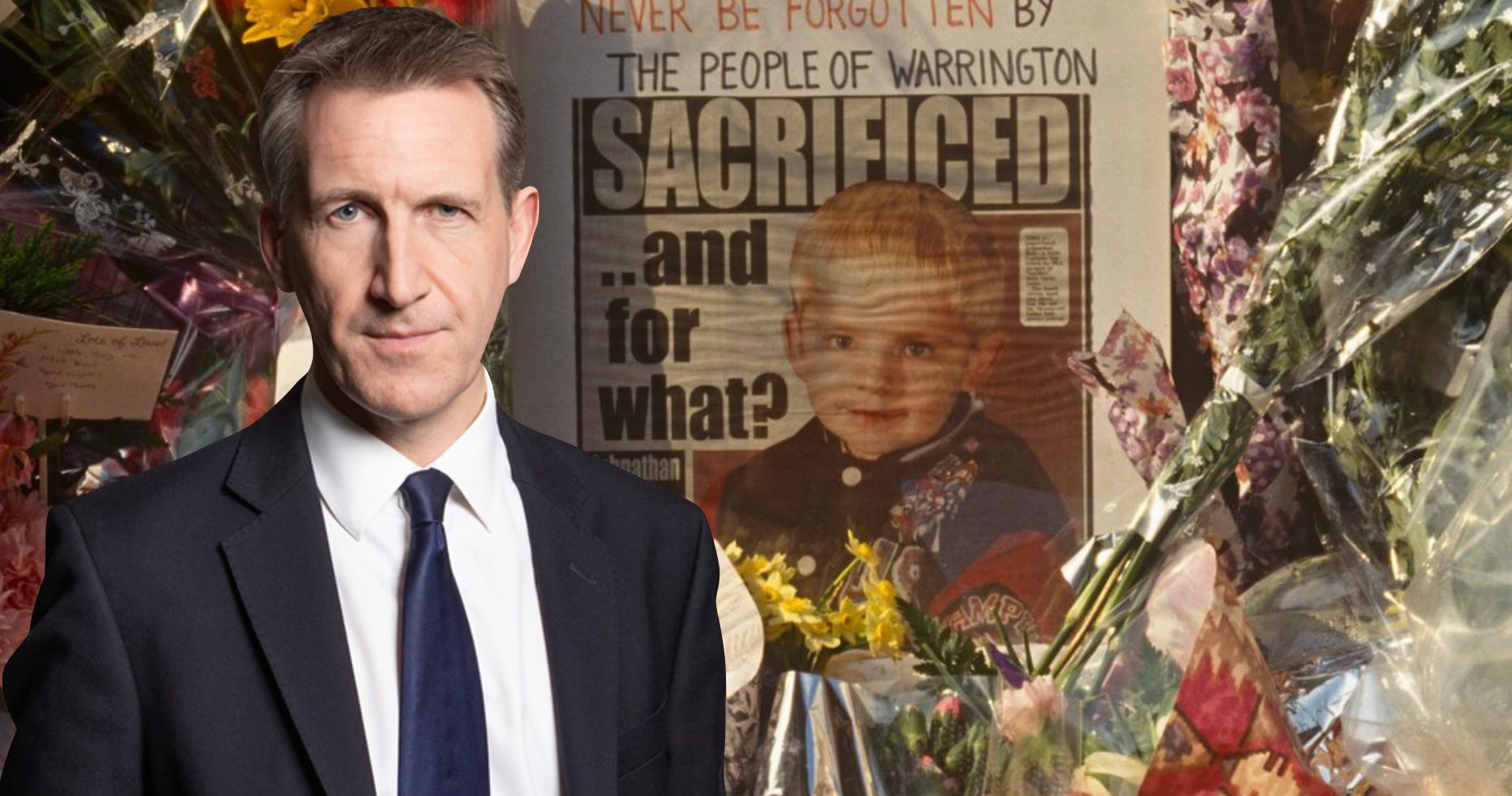
Before becoming Defence Secretary, Dan Jarvis was one of the government’s leading advocates for the Troubles Bill.
Responding to concerns about the legislation, in a Guardian article, he argued: “The last government’s Legacy Act shut down police investigations and proposed immunity for terrorists. This left many families feeling they had nowhere to go to continue their search for justice, or simply for answers about what happened to their loved ones.”
He added: “This government’s legislation will put that right. It guarantees no terrorist will be able to claim immunity from prosecution, while ensuring there is an effective and wholly independent legacy commission to conduct investigations that families right across the United Kingdom can have confidence in.”
Today, those comments carry greater weight.
Jarvis is no longer the Security Minister responsible for explaining the Bill. He is the Defence Secretary responsible for maintaining the confidence of the Armed Forces.
Yet the article itself also reveals something else.
The families quoted do not primarily speak about prosecutions.
They speak about answers.
Graeme Downie MP, whose childhood friend Tim Parry was killed in the Warrington bombing, said: “I don’t seek revenge and I don’t think the Parry family ever expect to get justice, but I do want answers and so do hundreds of others.”
Similarly, Mo Norton, whose brother Bombardier Terence Griffin was killed in the M62 coach bombing, said: “I need to know that Terence’s death has been fully investigated, I don’t think it has been properly investigated in the past.”
Those are entirely understandable positions.
Few people would argue that families do not deserve answers about the deaths of their loved ones.
The difficulty is that the families’ argument and the government’s argument are not quite the same thing.
The families are asking whether the truth has been established.
The government is presenting the Bill as a mechanism for justice through renewed investigation and the removal of immunity.
After fifty years, however, successful prosecutions are increasingly unlikely. Witnesses die. Memories fade. Evidence deteriorates. Suspects age or pass away.
That reality affects all sides.
Which raises an obvious question.
If convictions are unlikely, what practical outcome is the process intended to achieve?
This is where many veterans part company with the government’s argument.
Their concern has never primarily been immunity.
Their concern is process.
Veterans repeatedly argue that the punishment is not necessarily conviction or imprisonment. It is the possibility of repeated investigation, often decades after the original events and sometimes after earlier investigations have already taken place.
A veteran may never be charged.
He may never appear in court.
He may never be convicted.
Yet he can still spend years living under uncertainty, scrutiny and suspicion.
That is why veterans often say that “process is punishment”.
Whether one agrees with that assessment or not, it points to a broader issue.
The passage of time affects different groups in different ways.
Many terrorists are dead.
Many were never identified.
Others benefited from political arrangements — notably so-called “comfort letters” and prison release — that substantially reduced the prospect of future imprisonment.
Former soldiers, by contrast, remain identifiable. Service records exist. Military records exist. State archives exist.
The result is that a system which appears even-handed in theory may operate very differently in practice.
Families deserve answers.
Victims deserve recognition.
The question facing the new Defence Secretary is whether the process he previously championed can provide answers to victims’ families while avoiding what veterans regard as an unequal burden on those who served.
Beyond that lies a broader issue.
The Armed Forces Covenant is not a welfare programme or a slogan.
It is an expression of the nation’s obligations to those who serve.
For many veterans, the concern is whether a process perceived as unfair weakens that covenant, damages morale among serving personnel, and influences how future generations view military service.
That concern sits behind the politics, the legislation and the statistics.
It is also likely to outlast the Bill itself.